


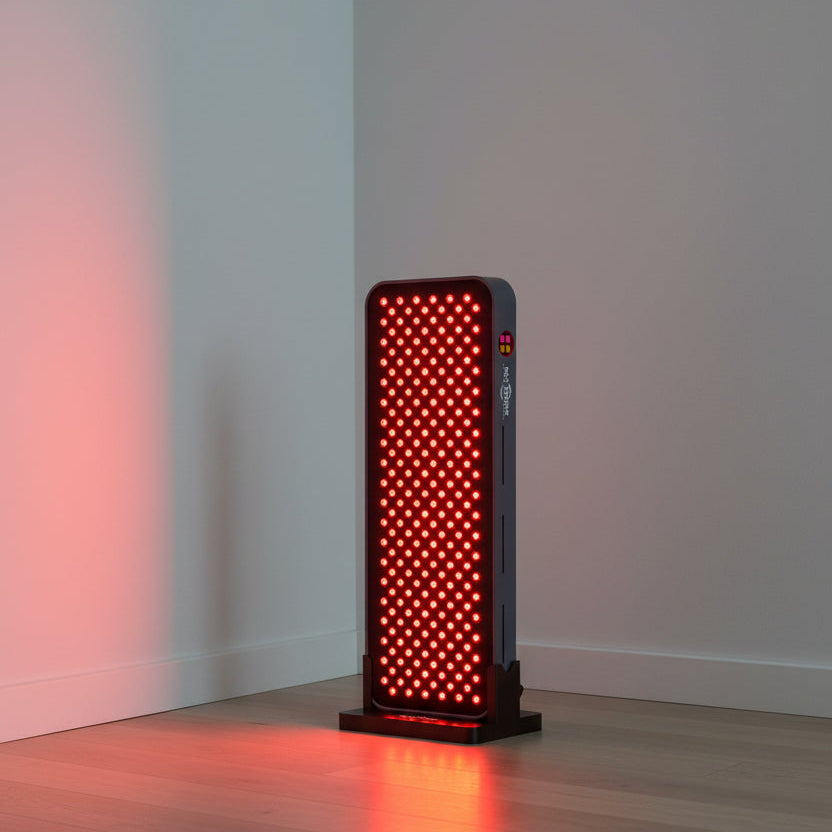


RLT Home Total Spectrum COMPACT, 216 LED, 7-Wavelength Panel
The same panel, three times the reach
- 216 LEDs across 7 wavelengths
- 99.0 mW/cm² at 6 inches
- 30.3 inches of panel
- ≈0.0 µT at 6 inches
Choose options
At a glance
What the numbers on the box mean.
RLT names every wavelength on this panel, publishes how much of the array each one gets, and states which instrument took each irradiance reading. Most listings give you none of that. Here it is in order, one number at a time.
Scroll to read the panel
01 · Spectrum
Seven bands, named.
480nm to 1064nm across 216 LEDs, grouped into four channels you can set separately in custom mode: blue, red, near-infrared and 1064nm. Scroll through them one at a time.
Reading660nm vs. 850nm: what the two numbers on a red light panel actually mean

Visible blue
6% of the array. Channel 1 of 4: blue runs on its own channel.
- 480nmVisible blue. 6% of the array. Channel 1 of 4: blue runs on its own channel.
- 630nmVisible red. 19% of the array. Channel 2, shared with 660nm.
- 660nmVisible red. 19% of the array. The second red band on channel 2.
- 810nmNear-infrared. 19% of the array. Channel 3 of 4, the first of three near-infrared bands.
- 830nmNear-infrared. 14% of the array. The middle of the near-infrared cluster.
- 850nmNear-infrared. 9% of the array. The last near-infrared band on channel 3.
- 1064nmInfrared. 14% of the array. Channel 4, on its own. Very few home panels carry it.
02 · Distance
One distance, one instrument.
RLT publishes 99.0 mW/cm² at 6 inches, measured with a spectrometer. It also publishes 172 mW/cm² at 8 inches from a solar power meter, which reads high on narrow-band LEDs. The two are not comparable, so only the spectrometer figure is drawn here. It is the one to hold other brands against.
ReadingRed light therapy: wavelengths, timelines, and what the research measures
03 · Session
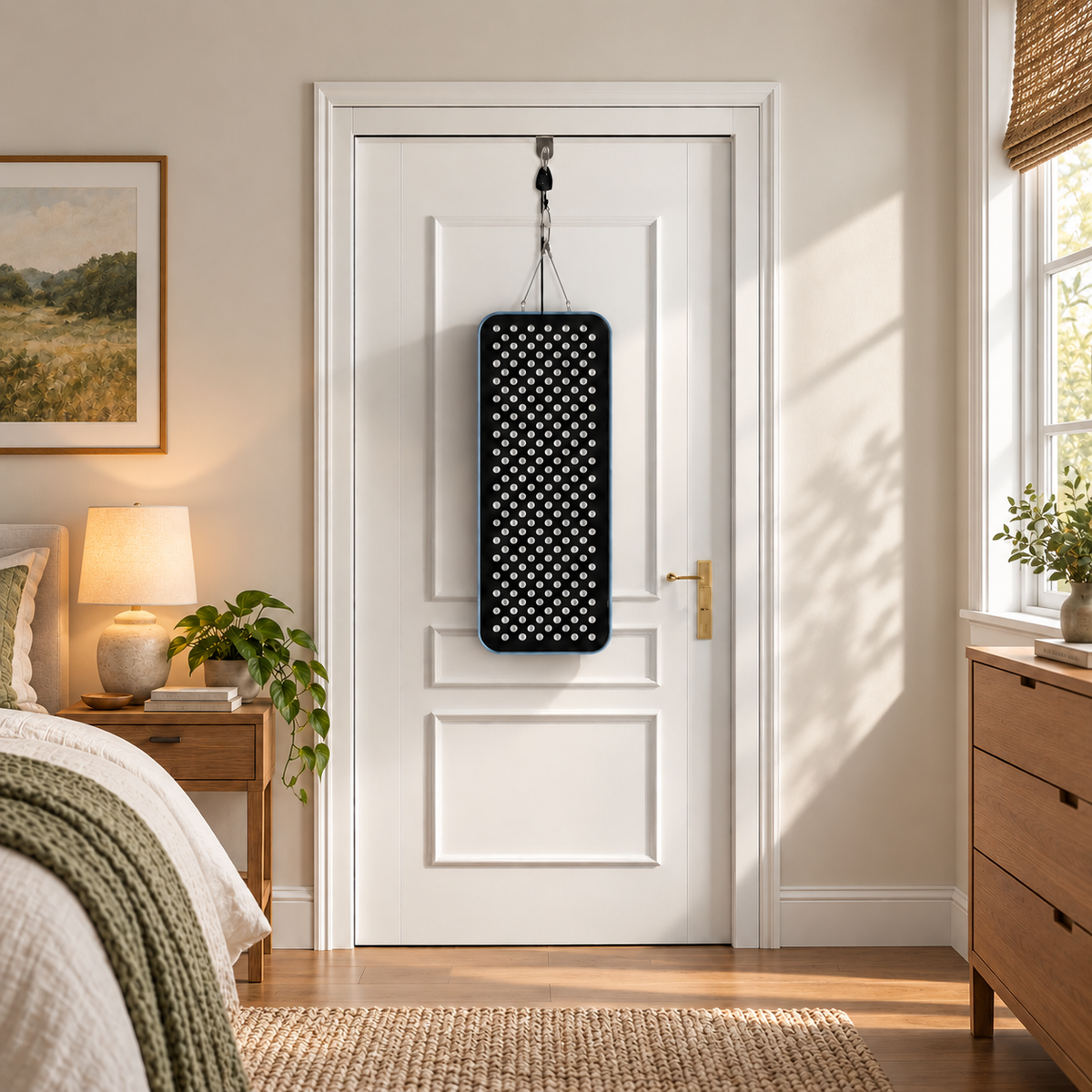
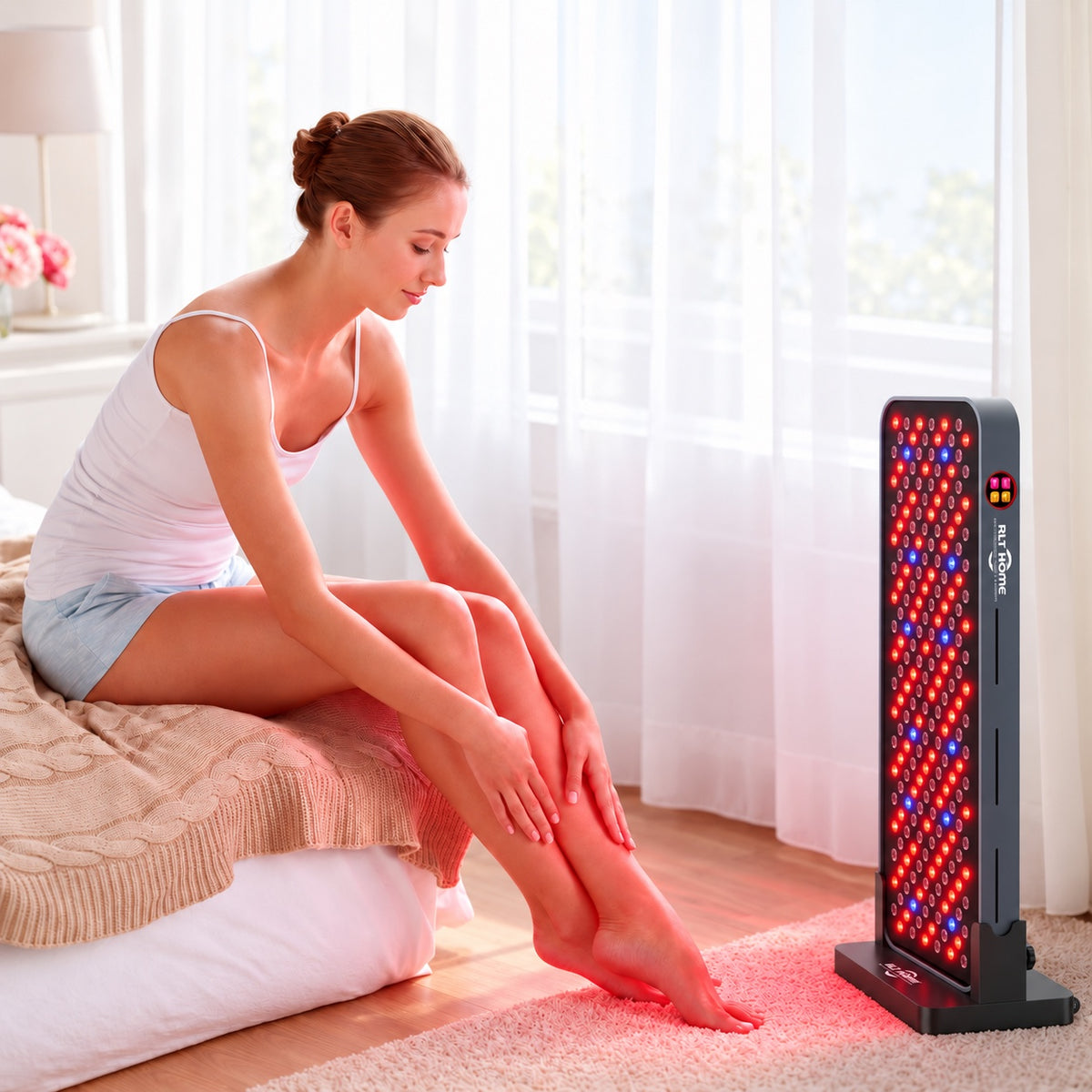
Ten to twenty minutes. Floor or door.
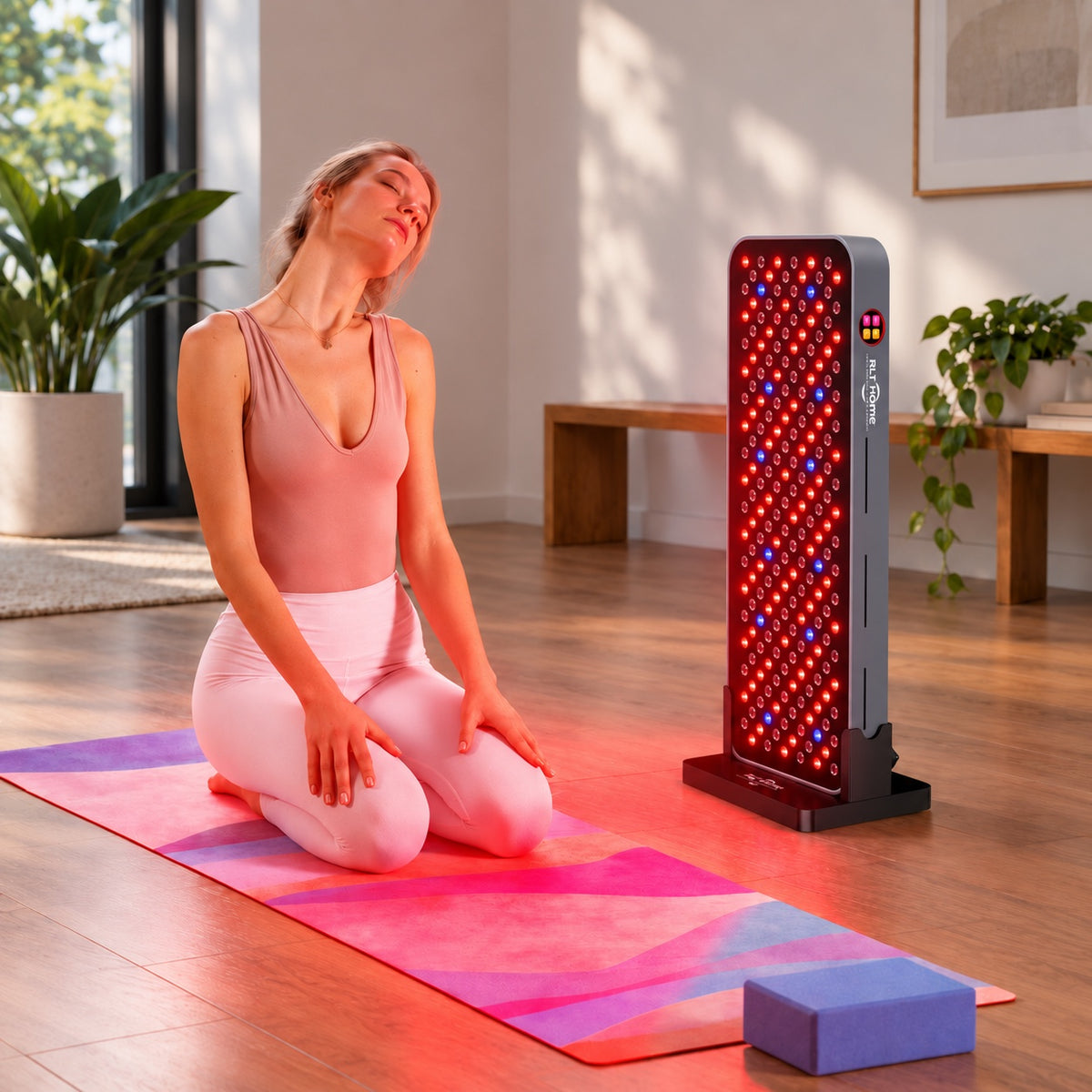
No booking and no drive. It stands in the corner of a room you already use, or hangs on the back of a door, and a session fits before the first call of the day.
-
01Position
On the floor with the included stand, or on the back of a door with the hanging kit. Six inches out is where the 99.0 mW/cm² figure is measured.
-
02Set
One of nine presets, or custom mode with the four channels set separately. Touch panel or remote.
-
03Run
10 to 20 minutes. Wear the supplied goggles, particularly with the panel near face level.
Stand and door-hanging kit both ship in the box.
04 · The honest comparison
COMPACT or MINI?
Same seven wavelengths at the same densities, and near-identical irradiance. The COMPACT is not the stronger panel. It is the same light across three times the LEDs and roughly three times the length. Choose on the area you want to cover.
COMPACT
$1,095- 216 LEDs, 30.3" × 11.8" × 2.6"
- 99.0 mW/cm² at 6" (spectrometer)
- Back, shoulders and legs from one position
- 22 lbs (10 kg)
For covering the back or both legs without repositioning mid-session.
MINI
$595- 72 LEDs, 11.8" × 11.4" × 2.6"
- 98.7 mW/cm² at 6" (spectrometer)
- Face, hands and single joints
- 8.8 lbs (4 kg)
For a smaller area, at a lower price.
View the MINIOverview
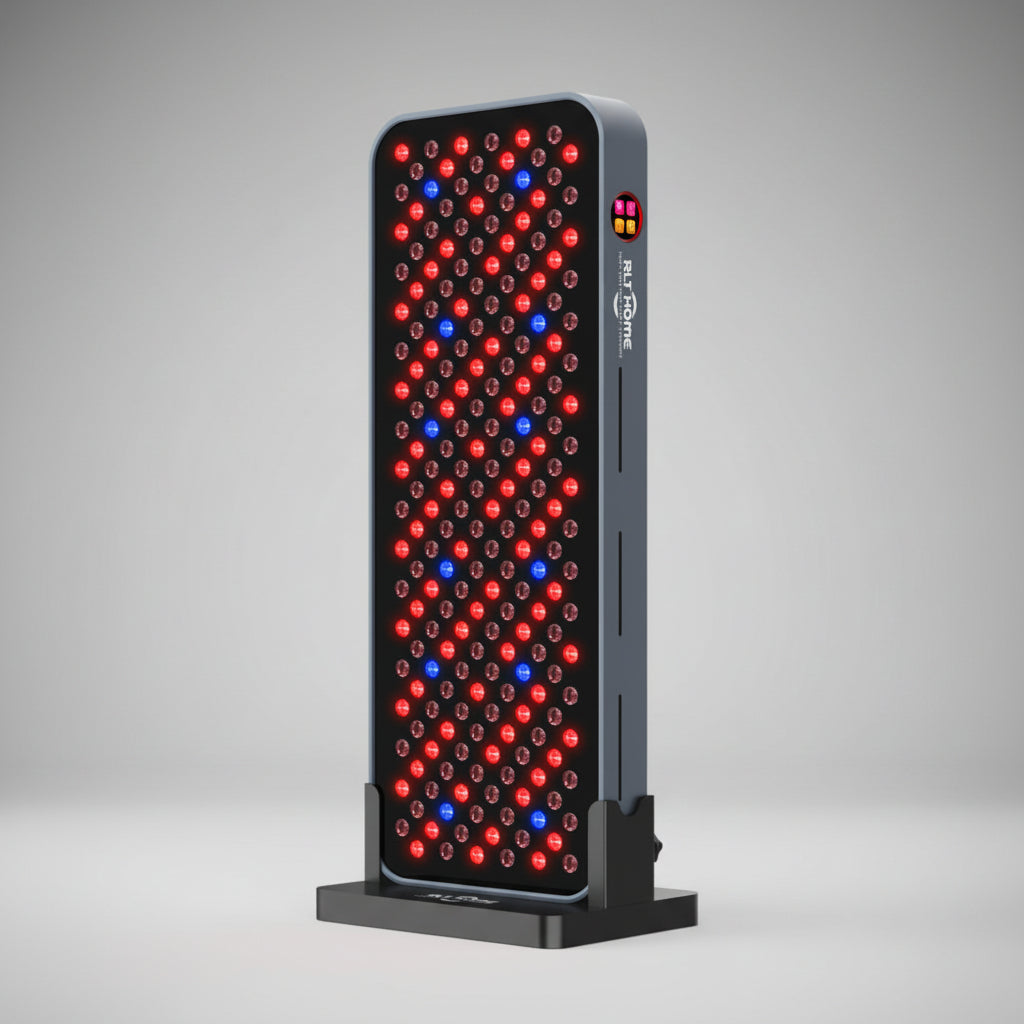
216 LEDs across seven wavelengths from 480nm to 1064nm. Aluminium housing, 30 inches long, sized for the back, shoulders and legs.
Three times the LED count of the MINI and roughly three times the length, in the same 2.6-inch depth. Long enough to cover the back or both legs without repositioning. Ships with a stand and a door-hanging kit.
Seven wavelengths, and the density of each
Most panels run two wavelengths, sometimes five. This one carries seven, and RLT publishes the proportion of the array given to each, which is the number that actually matters, since a wavelength present at 2% of the array behaves very differently from one at 20%.
- 480nm: blue, 6% of array
- 630nm: red, 19%
- 660nm: red, 19%
- 810nm: near-infrared, 19%
- 830nm: near-infrared, 14%
- 850nm: near-infrared, 9%
- 1064nm: infrared, 14%
The 480nm and 1064nm bands are the unusual ones. Very few home panels carry either.
The seven bands are wired as four channels: blue (480nm), red (630 and 660nm), near-infrared (810, 830 and 850nm) and 1064nm. In custom mode each channel is set separately.

Two irradiance figures, and why they differ
RLT publishes irradiance measured two ways, and the gap between them is large:
- 172 mW/cm² at 8 inches: measured with a solar power meter
- 99.0 mW/cm² at 6 inches: measured with a spectrometer
A solar power meter is calibrated for broad-spectrum sunlight and reads high on a narrow-band LED array. A spectrometer measures the actual bands. The lower figure is the one to compare against other brands, and it is worth knowing that many published irradiance numbers in this category come from solar meters without saying so. RLT publishing both, with the instrument named, is unusual.
Both figures are stated at a distance. An irradiance number without a distance attached cannot be compared to anything.
Flicker and EMF
No flicker. The array does not strobe, which matters if you sit in front of it regularly. EMF measures approximately 0.0 µT at 6 inches or greater, taken with a Cornet meter. RLT publishes third-party test images for both.
COMPACT or MINI
Both panels are built the same way and run identical wavelengths at identical densities. What changes is how much of you they cover at once.
| MINI | COMPACT, this panel | |
|---|---|---|
| LEDs | 72 | 216 |
| Intended area | Face, hands, single joints | Back, shoulders, legs |
| Device size | 11.8 × 11.4 × 2.6" | 30.3 × 11.8 × 2.6" |
| Weight | 8.8 lbs (4 kg) | 22 lbs (10 kg) |
| Irradiance at 6" (spectrometer) | 98.7 mW/cm² | 99.0 mW/cm² |
| Irradiance at 8" (solar meter) | 170 mW/cm² | 172 mW/cm² |
| Shipped weight | 13.2 lbs (6 kg) | 26.5 lbs (12 kg) |
Identical on both: all seven wavelengths at the same densities, 0-5,000 Hz pulsing, nine preset modes plus a custom mode with four independently adjustable channels, touch interface and remote, 30-degree beam angle, 100,000-hour LED life, AC 100-240V, aluminium housing, RoHS and CE certified, no flicker, ≈0.0 µT EMF at 6 inches or more.
Note the irradiance rows: 99.0 versus 98.7 at six inches is not a meaningful difference. This panel is not more intense than the MINI. It is the same intensity spread across three times the LEDs and roughly three times the length. You are buying coverage area, which is what removes the need to reposition mid-session.
Specifications
- LEDs: 216
- Wavelengths: 480 / 630 / 660 / 810 / 830 / 850 / 1064nm
- Wavelength Densities: 6% / 19% / 19% / 19% / 14% / 9% / 14%
- Irradiance: 172 mW/cm² at 8" (solar power meter) · 99.0 mW/cm² at 6" (spectrometer)
- Beam Angle: 30 degrees
- Pulsing: 0-5,000 Hz, adjustable
- Modes: 9 presets plus a custom mode adjusting intensity and pulsing across 4 channels (red, blue, near-infrared, 1064nm) independently
- Controls: Touch interface and remote
- Flicker: None
- EMF: ≈0.0 µT at 6 inches or greater (Cornet meter)
- LED Lifespan: 100,000 hours
- Voltage: AC 100-240V
- Device Dimensions: 30.3" × 11.8" × 2.6" (770 × 300 × 65 mm)
- Device Weight: 22 lbs (10 kg)
- Shipped Dimensions: 33" × 15" × 7" (850 × 380 × 180 mm)
- Shipped Weight: 26.5 lbs (12 kg)
- Housing: Aluminium
- Certifications: RoHS, CE (Low Voltage Directive and Electromagnetic Compatibility Directive)
RoHS restricts hazardous materials in the build. The two CE certificates cover electrical safety and electromagnetic compatibility. These are manufacturing and safety standards.
What Is Included
- Total Spectrum COMPACT device
- Stand
- Remote control
- Protective reading glasses
- Blackout goggles
- Door hanging kit
- Power cable
- User manual

How to Use
Position the panel at the distance the irradiance figure is quoted for, six inches for the spectrometer number, eight for the solar meter number. Closer means a higher dose over a smaller area; further back covers more at lower intensity.
Sessions typically run 10 to 20 minutes. Use the supplied eye protection, particularly with the panel near face level. Do not look directly into the array.
Disclaimer
This product is sold for general wellness use only and is not intended to diagnose, treat, cure, or prevent any disease or medical condition. Consult a qualified healthcare provider before use if you are pregnant, photosensitive, take photosensitizing medication, or have an implanted device such as a pacemaker.
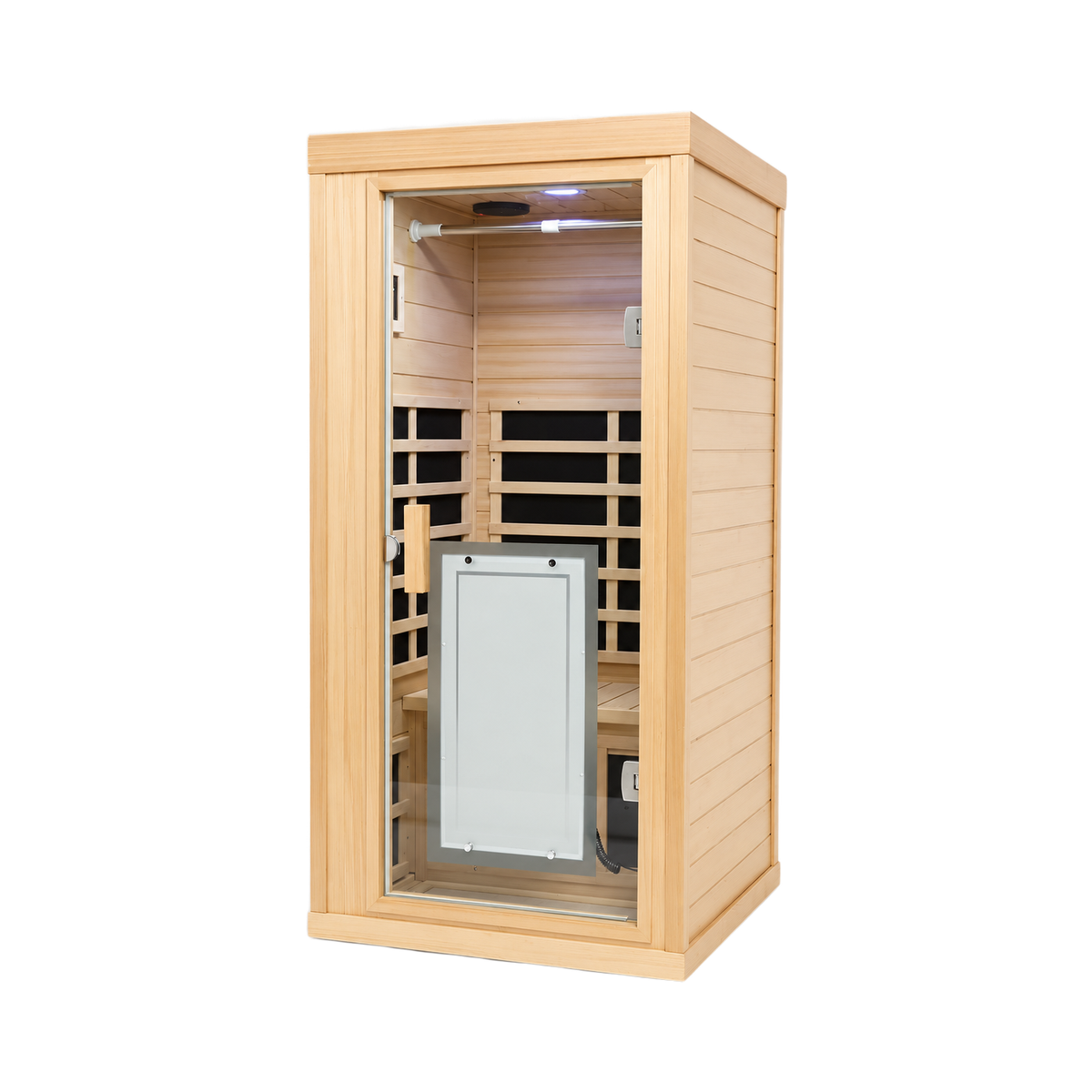
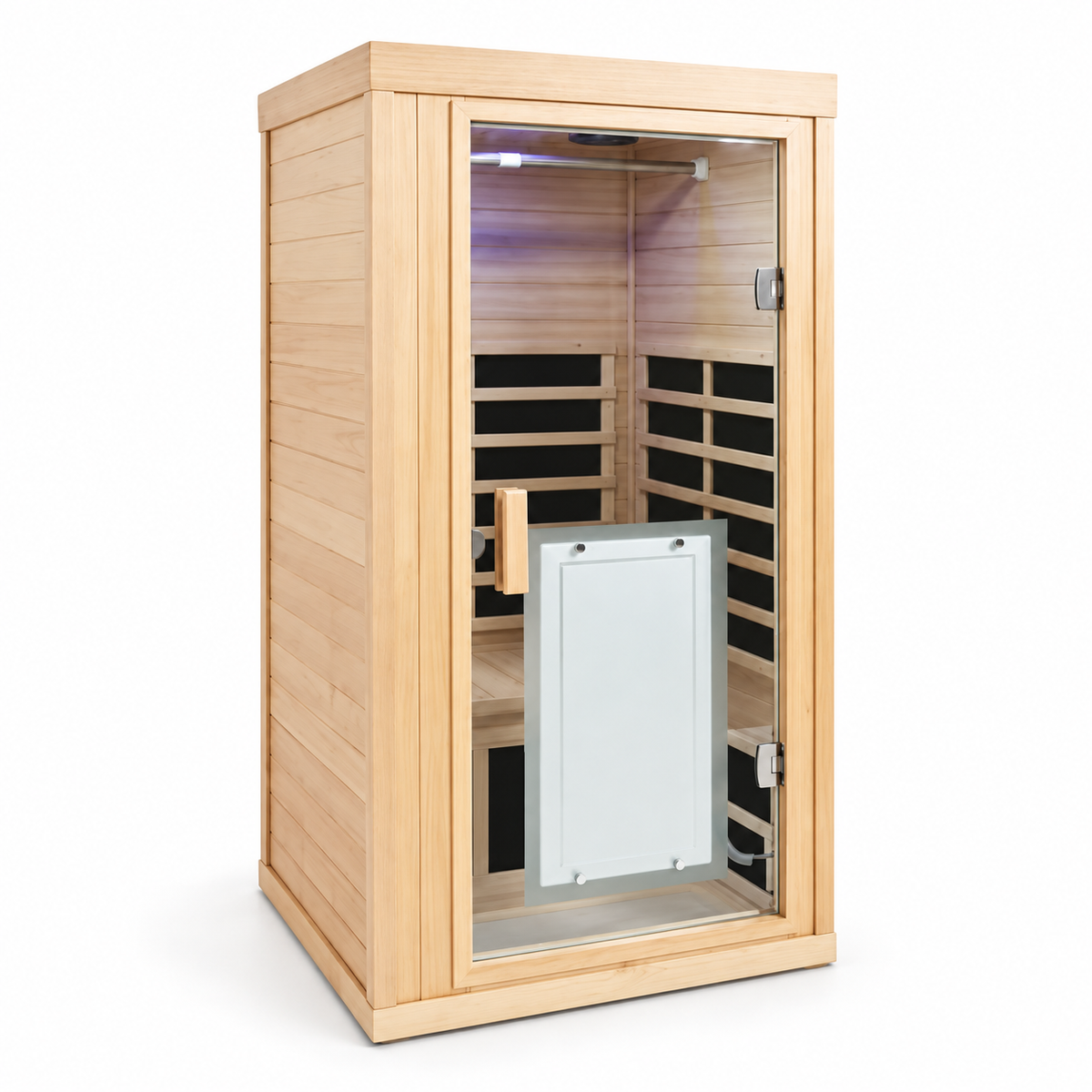
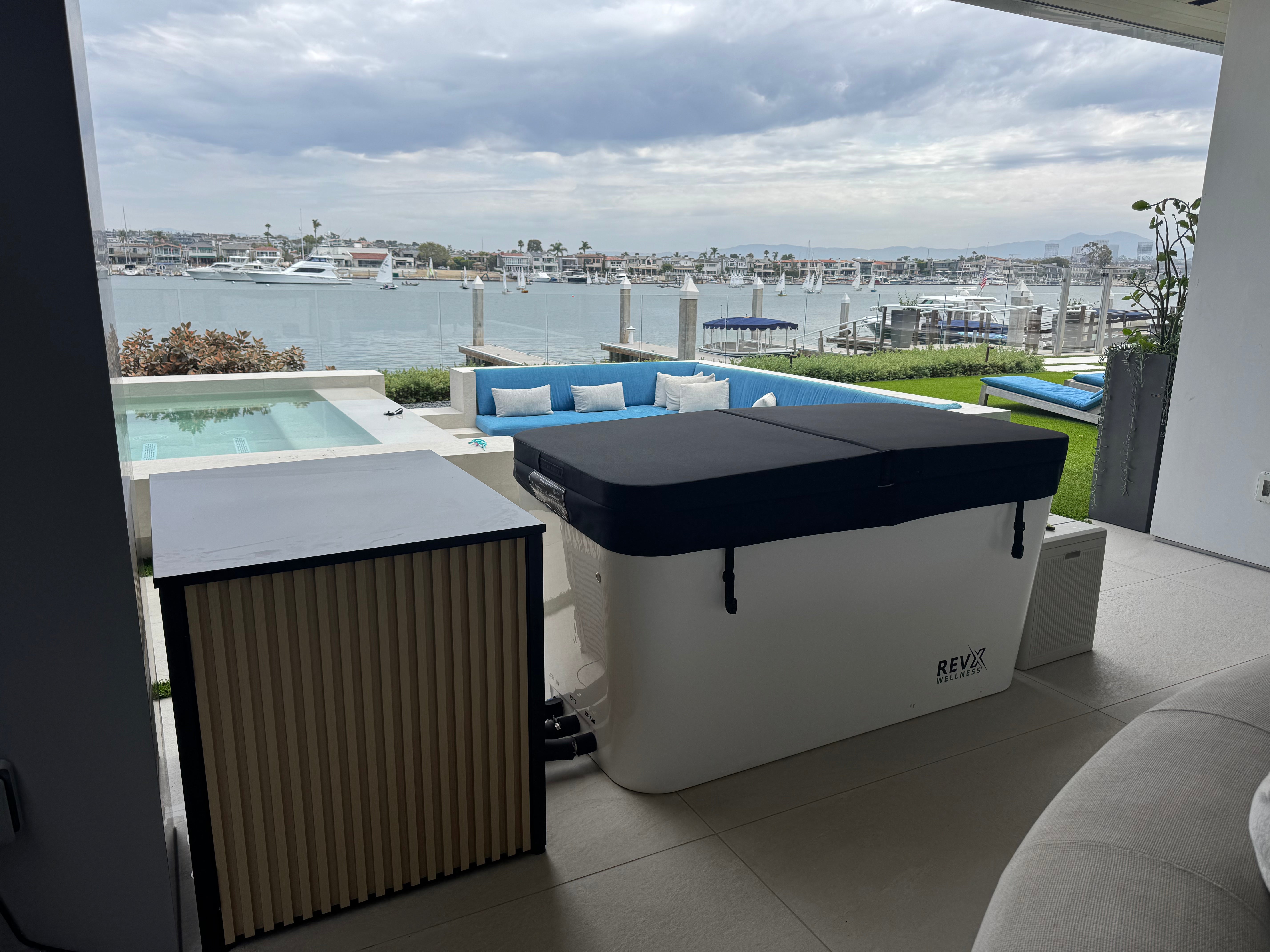
- Seven FAR infrared heaters
- Standard 120V outlet


- Harvia 3.5kW electric stove
- Wet or dry, session by session


- 34°F to 104°F
- Two-stage plus ozone

FAQ
Why are two different irradiance figures published?
COMPACT or MINI?
What do the 480nm and 1064nm bands add?
Does the array flicker?
What is in the box?
What if I need to return it?
ReadingNear-Infrared vs. Far-Infrared: Two Bands, and What a Spec Sheet Leaves Out