



Full Body Red Light Therapy Panel — 4 Wavelengths 630nm 660nm 850nm 940nm — 300 Dual Chip LEDs — 466W — Modular Design
Not sure this is the right starting point for you?
Find My Protocol matches you to a protocol tier — and shows whether this product is your week-one entry point or a later-stage addition.
Find My Protocol First →Choose options
Not sure this is the right starting point for you?
Find My Protocol matches you to a protocol tier — and shows whether this product is your week-one entry point or a later-stage addition.
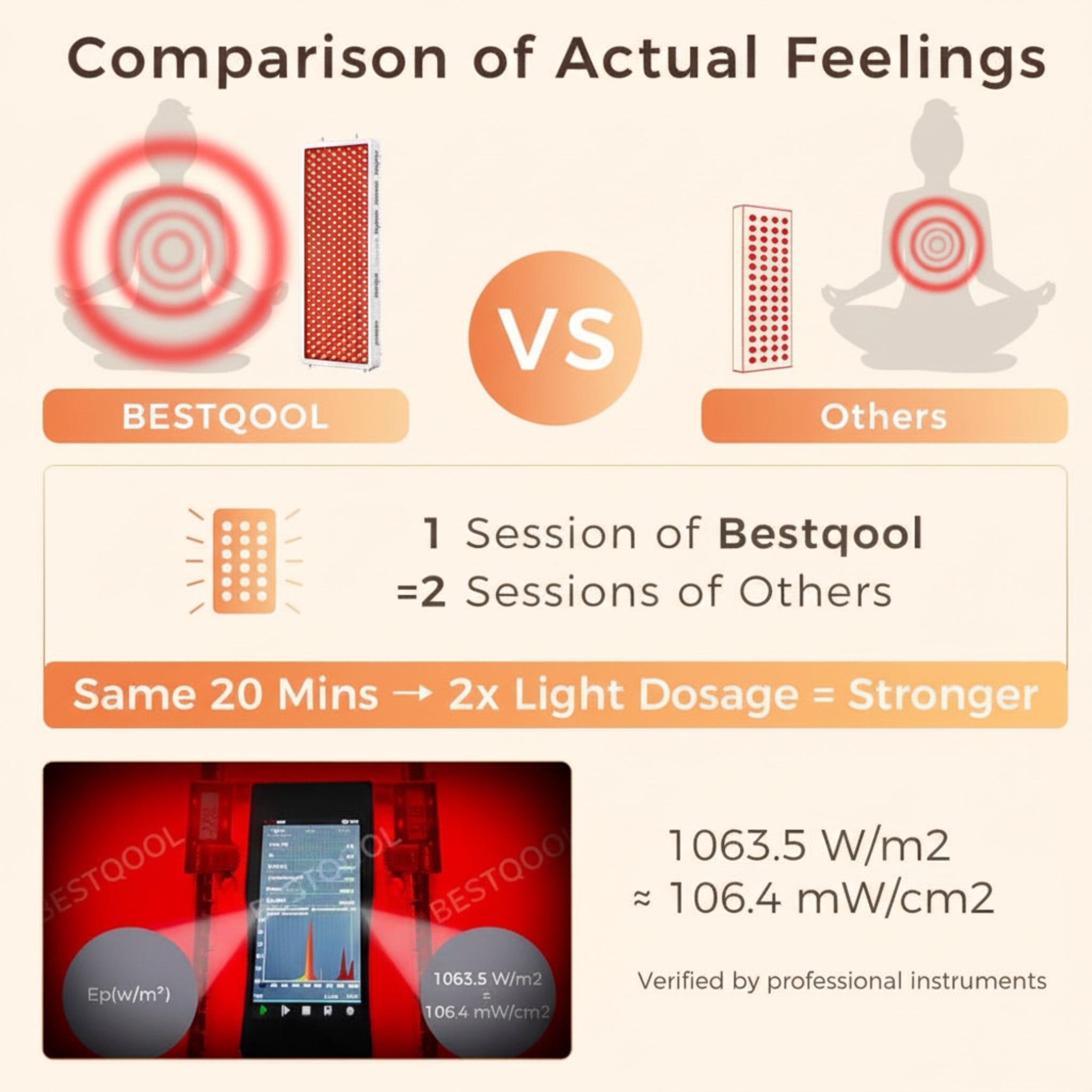
Find My Protocol First →Four wavelengths. Modular design. 106mW/cm² verified irradiance.
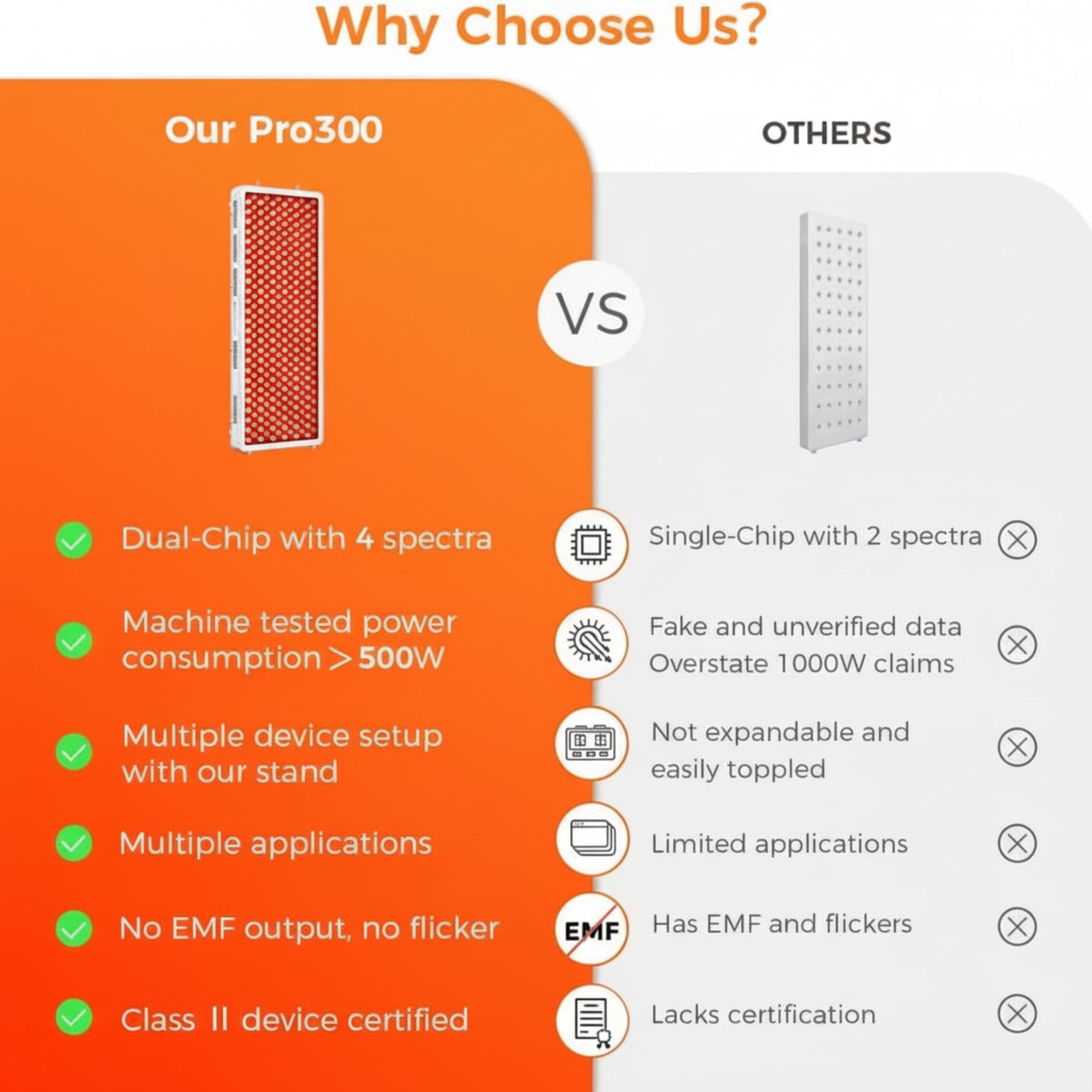
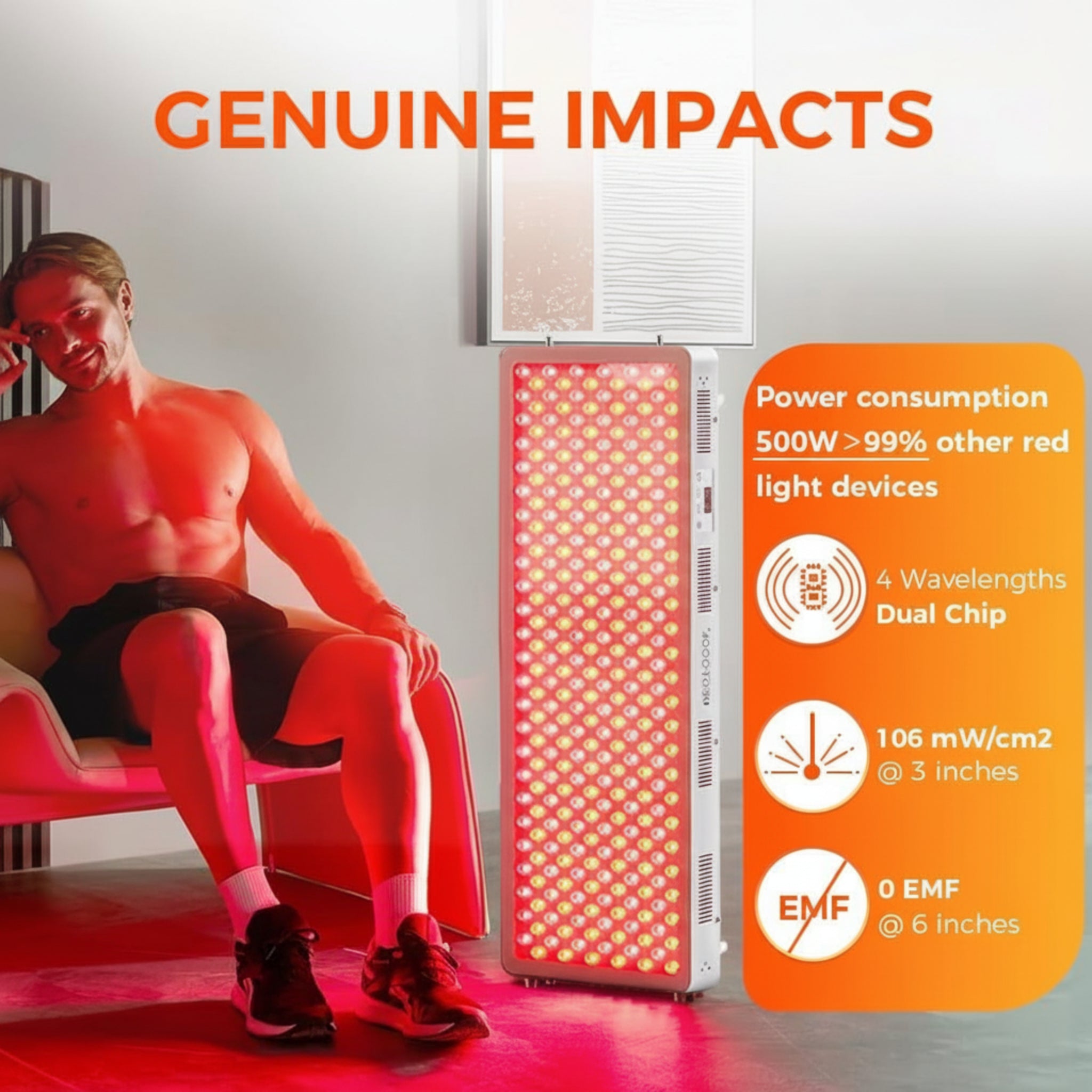
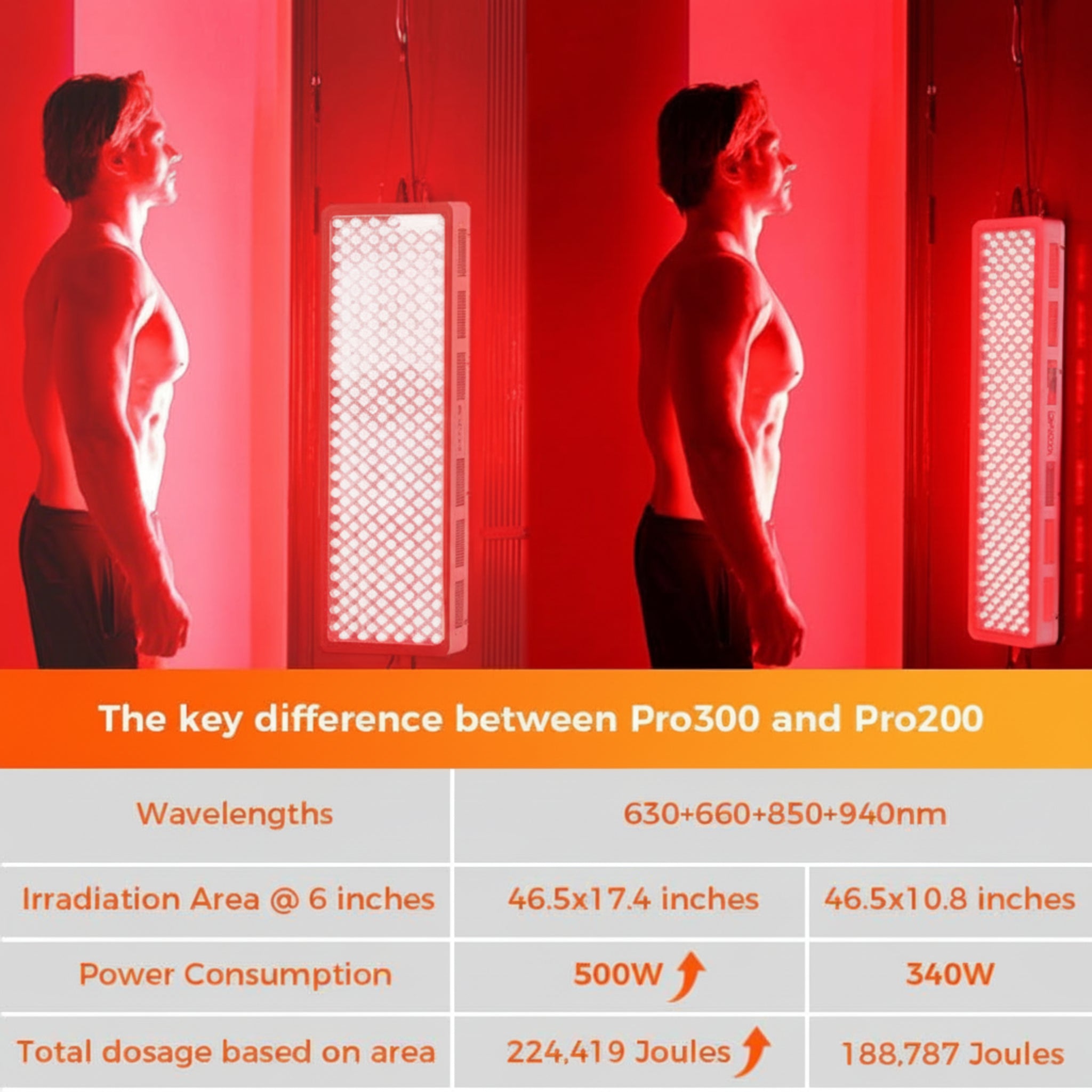
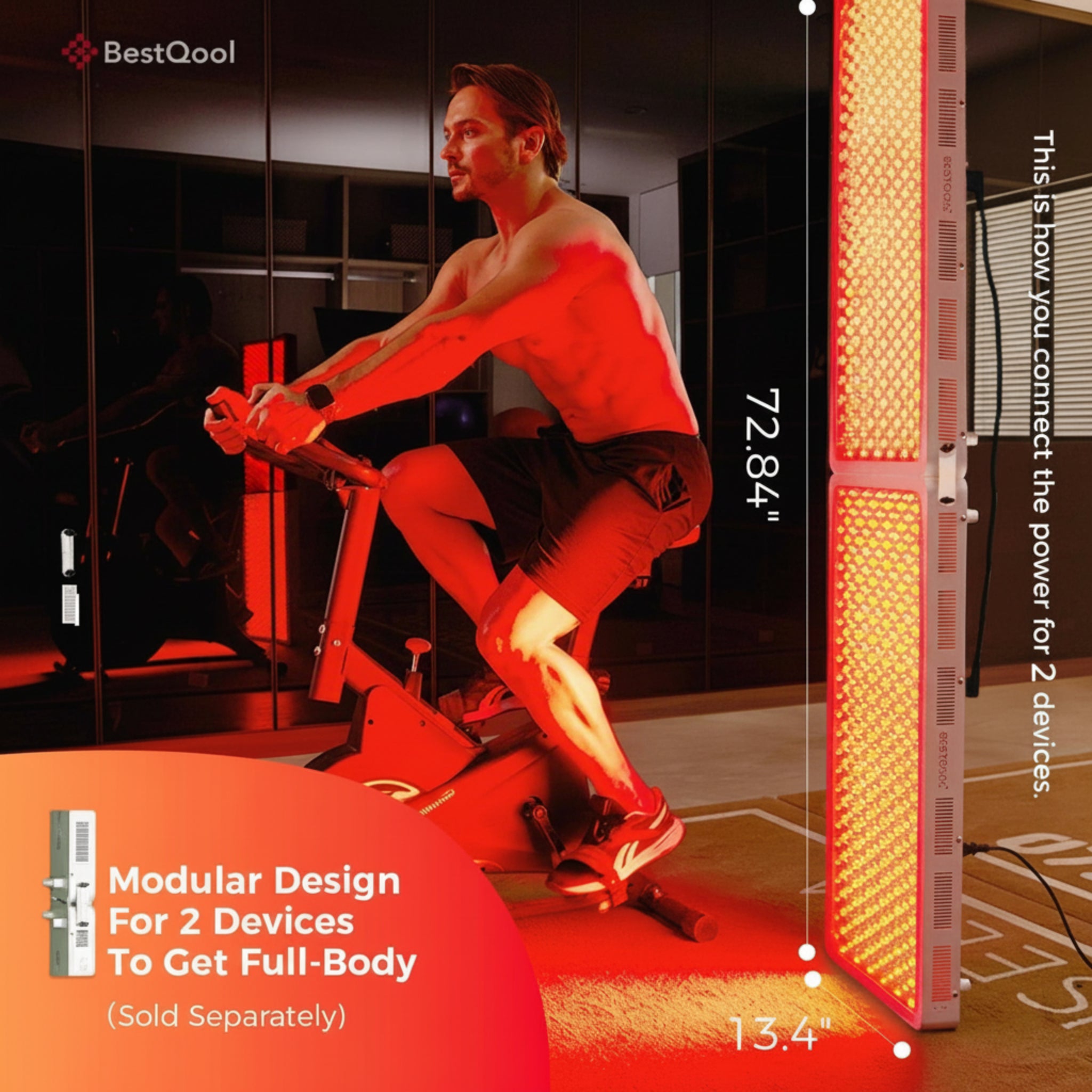
Most panels deliver two wavelengths. The Pro300 delivers four — 630nm, 660nm, 850nm, and 940nm — across 300 dual-chip LEDs at 466W measured power output. The modular design allows two panels to connect side by side, expanding coverage area without buying a larger single unit. One panel for targeted sessions. Two panels connected for full-body coverage. The same base unit either way.
The Four Wavelengths
630nm Red Light works at the surface level — skin, pores, and upper tissue. The most accessible wavelength for general daily use.
660nm Deep Red Light penetrates slightly deeper than 630nm into the upper dermal layers. The most widely studied wavelength in red light research.
850nm Near-Infrared is invisible to the naked eye but delivers output at depth into muscle and connective tissue. The most widely used near-infrared wavelength in recovery protocols.
940nm Near-Infrared is the deepest-penetrating wavelength in this panel — included as a supplementary wavelength alongside the primary three.
Modular Design
Two Pro300 panels connect directly via the built-in connectors. No additional hardware required beyond the mobile stand sold separately. This lets you build full-body coverage progressively — start with one panel, add a second when ready — without replacing the original unit.
Verified Third-Party Measurements
Every specification on this page reflects measured data, not manufacturer estimates.
- Power consumption: 466W measured
- Irradiance: 106mW/cm² at 3 inches — verified
- EMF: magnetic field 0mG, electric field 0 V/m at 6 inches — verified
The irradiance measurement at 3 inches is higher than panels measured at 6 inches. When comparing panels, always verify the distance at which irradiance is measured — the number changes significantly with distance.
Specifications
- Model: Pro300
- LEDs: 300 dual-chip
- Wavelengths: 630nm / 660nm / 850nm / 940nm
- Irradiance: 106mW/cm² at 3 inches
- Actual Power: 466W measured
- Voltage: AC standard
- Dimensions: 36.4 × 13.49 × 2.6 inches
- Weight: 19.1 lbs
- Material: Metal with built-in cooling fan
- EMF: 0mG magnetic / 0 V/m electric at 6 inches
- Beam Angle: 30 degrees
How to Use
Position the panel 6–12 inches from the target area for standard sessions. Begin with 15-minute sessions once daily. Increase to 20–30 minutes after the first week. Twice-daily sessions are acceptable — do not exceed three sessions per day.
Do not look directly at the LEDs. Eye protection is recommended when the panel is positioned near face level. The built-in cooling fan runs automatically during operation — this is normal.
Consistent daily use over a minimum of four weeks is recommended before evaluating results. Single sessions or irregular use produces less consistent results.
Frequently Asked Questions
What should I know before my first session? Position the panel at the correct distance, use eye protection if the panel is near face level, and start with shorter sessions before extending duration. Consistency across weeks matters more than session length.
How long before I notice results? Response varies by individual, protocol, and consistency of use. A minimum of four weeks of regular sessions is a reasonable timeframe before drawing conclusions about personal response.
Can I connect two panels together? Yes. Two Pro300 panels connect directly via the built-in connectors for expanded coverage. A compatible mobile stand is available separately.
Disclaimer
This product is intended for general wellness use only. It is not a medical device and is not intended to diagnose, treat, cure, or prevent any disease or medical condition. Consult a qualified healthcare provider before use if you are pregnant, photosensitive, take photosensitizing medications, or have an implanted device such as a pacemaker.